Over 80 percent of American car owners say protecting their vehicle’s finish is a top priority, but many overlook the power of professional detailing. Regular detailing offers more than just a clean look—it delivers critical defense against UV rays, grit, and aging that threaten your vehicle’s value. By understanding professional techniques and common mistakes, you can make smart choices for lasting paint protection and preserve your American car’s appeal on every drive.
Ultimate Guide to Paint Protection Detailing
- Defining Detailing For Paint Protection
- Types Of Detailing And Their Functions
- How Detailing Enhances Paint Protection
- Common Detailing Mistakes To Avoid
- Cost, Maintenance, And Longevity Factors
Key Takeaways
| Point | Details |
|---|---|
| Comprehensive Detailing | Auto detailing involves meticulous cleaning and protection of a vehicle’s exterior and interior, enhancing appearance and longevity. |
| Importance of Professional Services | Investing in professional detailing every 4-6 months preserves paint protection and maintains a showroom-quality look. |
| Avoid Common Mistakes | Using inappropriate cleaning agents and improper drying techniques can damage the vehicle’s finish and reduce protective coatings. |
| Cost vs. Value | Regular detailing is a strategic investment that prevents costly repairs and maximizes vehicle resale value over time. |
Defining Detailing for Paint Protection
Auto detailing represents a comprehensive approach to vehicle maintenance that goes far beyond a simple car wash. Exterior detailing involves a meticulous process of cleaning, restoring, and protecting a vehicle’s paintwork through specialized techniques designed to preserve its aesthetic and structural integrity.
The process typically involves multiple strategic steps that transform a vehicle’s appearance while providing critical protective measures. These steps include thorough washing, clay bar treatment to remove surface contaminants, precise polishing to eliminate minor imperfections, and application of protective layers like wax or sealant. Each stage of detailing contributes to a comprehensive paint protection strategy that shields the vehicle’s exterior from environmental damage.
Professional detailing distinguishes itself from standard washing through its attention to microscopic details and use of specialized equipment. Trained technicians utilize professional-grade tools like microfiber towels, dual-action polishers, and high-quality compounds to address paint imperfections while maintaining the vehicle’s original finish. This process not only enhances visual appeal but also creates a protective barrier against UV rays, road debris, and chemical contaminants.
Pro Tip: Invest in periodic professional detailing services every 4-6 months to maintain your vehicle’s paint protection and preserve its showroom-quality appearance.
Types of Detailing and Their Functions
Auto detailing encompasses two primary categories that work together to comprehensively protect and enhance a vehicle’s appearance: exterior and interior detailing, each serving distinct but complementary functions.
Exterior Detailing focuses on the vehicle’s outer surfaces, involving a systematic approach to cleaning, restoration, and protection. The process typically includes multiple critical steps: washing to remove surface dirt, clay bar treatment to extract embedded contaminants, polishing to eliminate minor scratches, and application of protective sealants or waxes. Each stage is designed to not just clean, but to create a robust protective barrier against environmental damage like UV rays, road salt, and chemical pollutants.
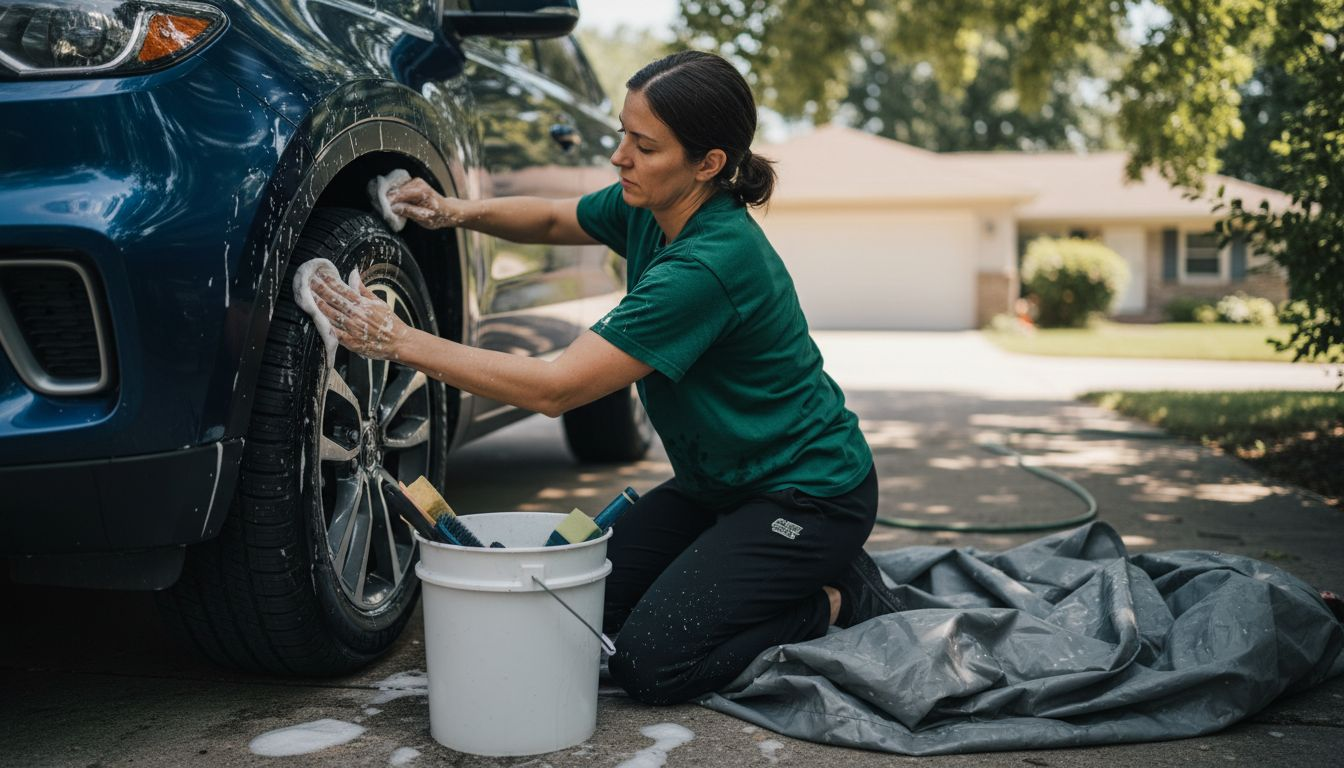
Interior Detailing targets the vehicle’s cabin, focusing on deep cleaning and preservation of surfaces like upholstery, dashboards, carpets, and console areas. Techniques include comprehensive vacuuming, steam cleaning, leather conditioning, and specialized treatments for different materials. Technicians use professional-grade tools and cleaning solutions to remove dirt, eliminate odors, and restore the interior to like-new condition.
Pro Tip: Always choose detailing services that offer both interior and exterior packages for comprehensive vehicle protection and maintenance.
Here’s a comparison of key features and benefits of exterior versus interior auto detailing:
| Aspect | Exterior Detailing | Interior Detailing |
|---|---|---|
| Main Focus | Paintwork, wheels, and glass | Upholstery, carpets, and dashboard |
| Key Processes | Washing, polishing, sealing | Vacuuming, steam cleaning, conditioning |
| Primary Benefit | Long-term paint protection | Enhanced cabin cleanliness |
| Impact on Value | Preserves exterior finish and resale | Improves comfort and interior appeal |
How Detailing Enhances Paint Protection
Paint protection is a complex process that goes beyond simple surface cleaning, involving multiple strategic techniques designed to shield a vehicle’s exterior from environmental degradation and maintain its aesthetic value.
Contaminant Removal is the critical first step in paint protection. Professional detailing employs specialized clay bar treatments that meticulously extract microscopic particles embedded in the paint surface, including industrial fallout, road grime, and atmospheric contaminants that can cause long-term damage. By systematically removing these bonded substances, detailing creates a smooth foundation for subsequent protective treatments.
The Paint Correction phase addresses existing imperfections through precision polishing techniques. Skilled technicians use professional-grade compounds and dual-action polishers to eliminate minor scratches, swirl marks, and oxidation. This process not only improves visual appearance but also prepares the paint surface for protective sealants by creating a uniform, smooth finish that maximizes the effectiveness of subsequent protective layers.
Pro Tip: Invest in annual professional paint correction services to maintain your vehicle’s protective barrier and preserve its original showroom-quality finish.
Common Detailing Mistakes to Avoid
Automotive detailing requires precision and careful technique to protect a vehicle’s appearance and structural integrity, with several critical errors that can compromise the entire detailing process.
Inappropriate Cleaning Agents represent a significant risk to vehicle surfaces. Many amateur detailers mistakenly use household cleaning products like dish soap, which can strip away essential protective waxes and damage paint finishes. These harsh chemicals break down protective layers, leaving the paint vulnerable to oxidation, UV damage, and environmental contaminants. Professional-grade automotive cleaning solutions are specifically formulated to clean effectively while preserving protective coatings.
Another common mistake involves improper drying techniques that can introduce additional scratches and imperfections. Using incorrect towels, applying excessive pressure, or failing to use microfiber materials can cause micro-abrasions that compromise the paint’s smooth surface. Technicians recommend using clean, soft microfiber towels and employing a gentle blotting technique rather than aggressive rubbing to prevent potential damage during the drying process.
Pro Tip: Always invest in professional-grade microfiber towels and automotive-specific cleaning solutions to protect your vehicle’s finish and avoid costly long-term damage.
Below is a summary of common detailing mistakes and their long-term consequences:
| Mistake | Example | Potential Consequence |
|---|---|---|
| Using household cleaners | Washing with dish soap or all-purpose products | Strips wax, increases paint damage |
| Improper drying techniques | Using rough towels or rubbing aggressively | Causes scratches and swirl marks |
| Skipping protective steps | Omitting clay bar or sealant application | Exposes paint to contaminants |
Cost, Maintenance, and Longevity Factors
Vehicle maintenance through professional detailing represents a strategic investment in long-term automotive preservation that directly impacts both vehicle performance and resale potential.
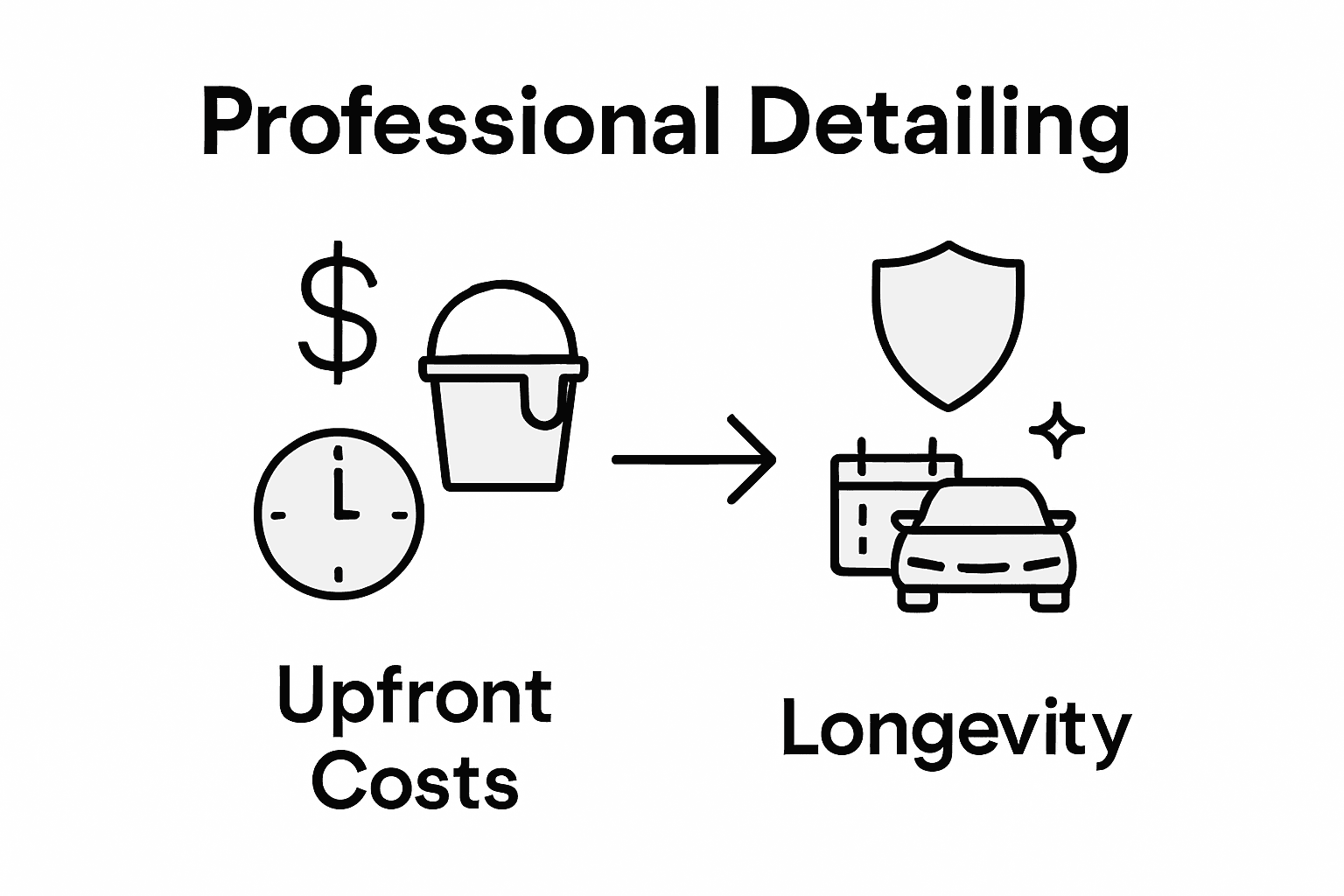
The financial considerations of detailing extend beyond immediate costs, with professional services providing substantial long-term value. Regular maintenance can significantly reduce potential repair expenses by preventing paint degradation, surface contamination, and structural deterioration. While initial detailing services might seem expensive, they ultimately protect against more costly future repairs by maintaining the vehicle’s structural integrity and aesthetic appeal.
Frequency of detailing plays a crucial role in maximizing protection and minimizing long-term expenses. Most automotive experts recommend comprehensive detailing every four to six months, with interim touch-up treatments between full sessions. This approach helps maintain protective layers, prevents accumulated damage, and ensures consistent vehicle appearance. Different factors like local climate, driving conditions, and vehicle usage can influence ideal maintenance intervals, making personalized professional assessment critical for optimal protection.
Pro Tip: Create a structured detailing maintenance schedule tailored to your specific vehicle’s environment and usage patterns to maximize protection and minimize long-term maintenance costs.
Protect Your Vehicle’s Beauty with Expert Detailing and Advanced Solutions
The challenge discussed in the article is how to maintain lasting paint protection and avoid common detailing mistakes that can damage your vehicle’s finish. Many car owners struggle with contaminants, scratches, and fading caused by improper cleaning and lack of protective layers. The goal is to preserve your car’s showroom-quality appearance while shielding it from harmful UV rays, road debris, and environmental contaminants through professional paint correction and protective techniques.
At VIVE AUTO STYLING, we understand these pain points and offer comprehensive services that align perfectly with the article’s emphasis on thorough cleaning, paint correction, and protective coatings. Our luxury auto detailing and paint protection film (PPF) solutions provide the ultimate defense to keep your vehicle looking pristine. Combining expert craftsmanship with premium ceramic coatings, we create a durable barrier that enhances your vehicle’s gloss and guards against daily wear.
Ready to protect your investment with precision and care Choose VIVE AUTO STYLING for professional detailing services that extend paint life and restore beauty. Explore our full range of offerings from professional car wash services to advanced paint protection film and ceramic coatings. Don’t wait for damage to set in Act now to maintain your vehicle’s value and appearance with Central Wyoming’s trusted experts.
Frequently Asked Questions
What is the importance of auto detailing for paint protection?
Auto detailing plays a crucial role in preserving a vehicle’s paint finish by employing specialized techniques such as washing, clay bar treatment, and polishing to remove contaminants and apply protective layers. This comprehensive process helps shield the exterior from environmental damage and maintains aesthetic appeal.
How often should I have my vehicle detailed to maintain paint protection?
Experts recommend having your vehicle detailed every four to six months to optimize paint protection. This regular maintenance helps preserve protective coatings and prevents potential surface damage from contaminants and UV exposure.
What techniques are involved in the detailing process for paint protection?
The detailing process for paint protection includes cleaning, removing contaminants with clay bar treatment, correcting imperfections through polishing, and applying protective layers such as wax or sealant to create a barrier against environmental threats.
Can I detail my car myself, or should I hire a professional for paint protection?
While DIY detailing is possible, professional detailing services use specialized tools and techniques that ensure a more thorough and effective paint protection process. Trained technicians can better address paint imperfections and apply protective coatings, providing a higher level of care for your vehicle.