The Definitive Guide to Premium Vehicle Protection in Wyoming
Wyoming is a state that rewards those who prepare. From the high-desert light of Casper to the wind-scoured highways linking Mills, Evansville, and Bar Nunn, the very conditions that make Central Wyoming extraordinary are the same conditions that quietly, relentlessly test every vehicle on the road. Intense ultraviolet exposure, temperature swings that stress clear coat, gravel and road debris lifted by crosswinds, and the long distances Wyoming drivers cover between towns all conspire to dull, stain, and chip automotive paint long before its time.
For owners of luxury vehicles, performance cars, trucks, and well-loved daily drivers alike, the question is not whether the environment will leave its mark, but how thoughtfully you choose to defend against it. This guide is the definitive resource for understanding premium vehicle protection in Wyoming — window tint, ceramic coating, and paint protection film (PPF) — and how to preserve your vehicle's finish, its showroom-quality appearance, and its long-term investment value against the demands of Central Wyoming driving.
What Is Premium Vehicle Protection?
Premium vehicle protection is the discipline of shielding your vehicle's exterior and interior with engineered, professionally installed films and coatings rather than temporary cosmetics. Where a conventional wax offers a few weeks of shallow gloss, professional-grade protection delivers years of measurable, visible defense. Three technologies form the foundation of a complete protection strategy, and each addresses a different layer of the threats your vehicle faces.
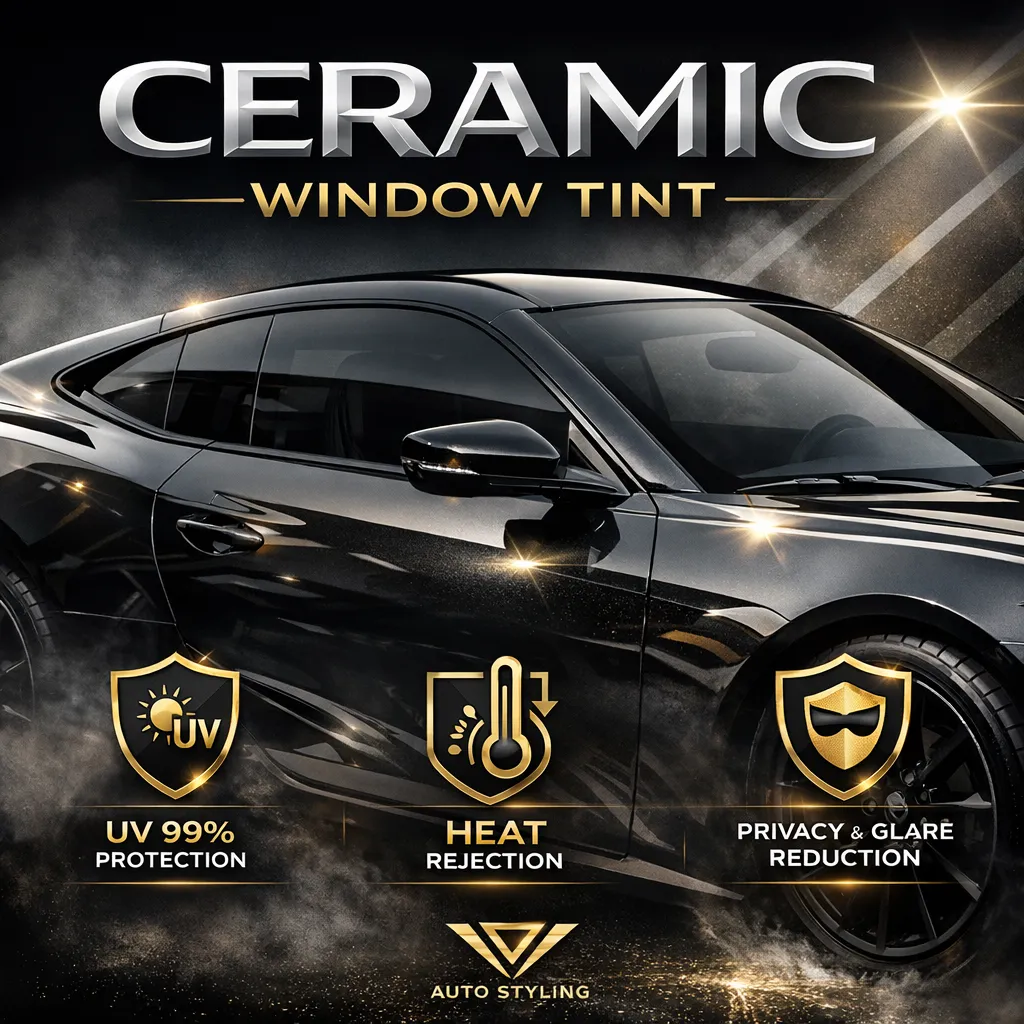
Window tint is a precision-applied film bonded to the interior of your vehicle's glass. Modern automotive window tint — particularly nano-ceramic window tint — rejects infrared heat, blocks UV radiation, reduces glare, and adds privacy without the signal interference of older metallic films. For Wyoming drivers, ceramic window tint is one of the highest-impact comfort and preservation upgrades available: it keeps the cabin cooler through long summer drives, protects leather and trim from UV fading, and reduces eye fatigue on bright, snow-glare mornings.
Ceramic coating is a liquid polymer that chemically bonds with your vehicle's clear coat, curing into a rigid, hydrophobic layer of surface protection. A professional ceramic coating enhances depth, clarity, and gloss while making the vehicle markedly easier to clean. Contaminants — from hard water and bird droppings to road grime and industrial fallout — struggle to adhere to a coated surface, so washing takes less effort and produces a more consistent finish. For Casper vehicle owners who want lasting gloss enhancement and chemical resistance, a professional ceramic coating is the standard.
Paint protection film (PPF), often called a clear bra, is a transparent, self-healing urethane film applied to the painted surfaces most vulnerable to impact. Where ceramic coating defends against chemical and environmental contamination, PPF defends against the physical: rock chips, gravel strikes, scuffs, and minor abrasions. Modern self-healing film actually repairs light swirl marks and micro-scratches when warmed by the sun or a heat gun, preserving an optically clear finish for years. For Wyoming's gravel highways, PPF is the difference between a front end that stays pristine and one that gradually frosts over with stone chips.
Modern vehicle owners choose this layered approach because no single product addresses every threat. Window tint protects the interior and cabin comfort. Ceramic coating protects the paint chemically and visually. PPF protects the paint physically. Applied together, they form a complete preservation system — the same approach used by collectors and enthusiasts who intend to keep their vehicles in concours condition for years.
The Luxury Benefits of Professional Vehicle Protection
The value of professional protection extends far beyond the surface. Owners who invest in premium window tint, ceramic coating, and PPF consistently describe the same core benefits — each of which compounds over the life of the vehicle.
- Enhanced appearance. A properly installed ceramic coating deepens the reflective quality of your paint, producing the kind of liquid, wet-look gloss associated with showroom floors and concours lawns. Self-healing PPF keeps high-impact panels optically clear. Together, they preserve the depth, clarity, and gloss that make a vehicle look cared for rather than simply driven.
- Investment protection. A vehicle is often among the largest purchases a family or professional makes. Preserved paint retains measurable resale and trade value. Buyers and appraisers read stone chips, oxidation, and interior fading as signs of neglect; a protected, well-maintained vehicle reads as a cared-for asset.
- Long-term durability. Where wax lasts weeks and sealants last months, a professional ceramic coating lasts years and self-healing PPF lasts for the life of the warranty. You replace periodic reapplication with a single, properly executed installation.
- Reduced maintenance. A hydrophobic, coated surface sheds water and dirt, so washing takes less time, less effort, and less product. The vehicle looks better between washes and returns to pristine condition more easily.
- Improved ownership experience. There is a quiet satisfaction in approaching a vehicle that still looks new — sliding into a cool, UV-protected cabin on a summer afternoon, watching water bead and sheet off a coated panel, or knowing a gravel haul up the highway won't leave its signature across your hood.
- Resale value preservation. Protected vehicles present better in photographs and in person, command stronger offers, and spend less time on the market. For luxury and performance vehicles in particular, preserved original paint is a meaningful part of value.
Why Wyoming Drivers Need Professional Vehicle Protection
Wyoming's environment is not incidental to this conversation — it is the central reason professional protection matters here. Several factors combine to make Central Wyoming one of the more demanding climates for automotive paint and interiors.
UV exposure. At elevation, with thin, dry air and wide-open horizons, UV radiation is intense year-round. Over time, ultraviolet light oxidizes automotive paint, fades leather and trim, and degrades plastics. Ceramic coating and window tint each interrupt this process at their respective surfaces.
Road debris and gravel highways. Wyoming's highways are practical, high-speed, and frequently sanded or graveled. Lifted debris strikes the front of the vehicle constantly — the hood, fenders, mirrors, and leading edges of doors. Self-healing paint protection film is purpose-built for exactly this threat, absorbing impacts that would otherwise permanently chip the clear coat.
Winter conditions. Snow, ice, road salt, and the freeze-thaw cycle stress every exterior surface. Contaminants embed in unprotected paint and accelerate oxidation. A coated surface resists that chemical bonding and is far easier to decontaminate before damage sets in.
Dust, dirt, and temperature fluctuations. Central Wyoming's dry, dusty conditions coat vehicles quickly, while temperature swings between afternoon sun and cold nights stress paint and clear coat. Hydrophobic protection means dust and grime rinse away rather than embedding and requiring aggressive, paint-marring cleaning.
Long-distance Wyoming driving. Distances between Casper, Mills, Evansville, Bar Nunn, and the rest of the state mean Wyoming vehicles accumulate highway miles — and the associated stone-chip exposure — faster than most. A vehicle driven daily across Wyoming faces more environmental contact in a year than a garaged car elsewhere faces in five. Protection is how you keep that accumulated contact from showing.
The Science Behind Premium Protection Technology
Understanding what these products are made of, and how they are installed, is what separates genuine professional protection from retail-grade alternatives. The materials, the installation process, and the underlying protection mechanisms all matter.
Window tint materials. Premium automotive window tint uses nano-ceramic technology — microscopic, non-conductive ceramic particles embedded in an optically clear film. Because the film contains no metal, it rejects infrared heat and UV without blocking the cell phone, GPS, keyless-entry, and satellite-radio signals that older metallic tints interfered with. The result is measurable heat rejection, up to 99% UV block, and reduced glare, all behind a film that can be virtually invisible or shaded for privacy depending on your preference.
Ceramic coating chemistry. A ceramic coating is a liquid polymer — primarily silicon dioxide (SiO₂), often blended with other oxides — suspended in a carrier. As it cures, it cross-links into a dense, glass-like matrix that chemically bonds to the microscopic structure of your clear coat. That bond is what makes the coating semi-permanent rather than wash-offable. The cured layer is hydrophobic (water beads and sheets off), resistant to chemical etching, and optically enhancing — it deepens gloss and clarifies color. The technology has advanced steadily: modern coatings cure harder, resist contamination longer, and offer extended warranties measured in years, not months.
PPF construction. Paint protection film is a multi-layer urethane: a topcoat engineered for self-healing, an elastomeric core that absorbs impact, and an adhesive formulated to release cleanly years later. The self-healing mechanism is genuinely impressive — light swirl marks and micro-scratches in the film's surface relax and disappear when the material reaches a threshold temperature (from sunlight or gentle heat). The clear bra remains optically transparent and, properly installed, is nearly invisible. The film is pattern-cut to each panel, wet-applied, squeegeed into place, and edge-finished so the protection follows the vehicle's exact lines.
Installation process. Every one of these technologies is only as good as its installation. That is why preparation is the heart of professional protection. Before a coating is applied, the paint is washed, decontaminated with clay, and — if needed — corrected to remove the swirl marks, oxidation, and light scratches that would otherwise be sealed beneath the coating. Before film is laid, panels are meticulously cleaned and edges are planned. A climate-controlled bay, proper lighting, and experienced hands are not luxuries; they are the difference between a flawless, years-long result and a short-lived disappointment. This is the core of professional installation standards.
Protection mechanisms and long-term performance. Each technology works in a distinct way: window tint filters radiation at the glass; ceramic coating bonds chemically to the clear coat and sheds contamination; PPF absorbs and disperses physical impact. Layered together, they address UV, heat, chemical, and physical threats simultaneously — the basis of long-term vehicle preservation.
PPF vs Ceramic Coating vs Window Tint: Choosing the Right Protection
Because these technologies defend against different threats, the most useful comparison is not which is "best" but which combination suits your vehicle, your driving, and your priorities. Here is how each compares to the alternatives.
Ceramic coating vs wax and sealants. Carnauba wax delivers a warm, natural glow — for a few weeks. Polymer sealants extend that to a couple of months. A professional ceramic coating, by contrast, bonds to the clear coat and lasts for years, withstanding the car-wash chemicals, UV, and temperature cycling that dissolve wax in weeks. For an owner who values consistent, low-maintenance gloss and chemical resistance, ceramic coating is the superior long-term answer; for a collector rotating show cars, a high-quality wax remains a legitimate finishing choice on a coated surface.
PPF vs temporary and traditional films. Older clear bras yellowed, cracked, and showed visible lines at panel edges; some retail films still do. Professional self-healing PPF resists yellowing, repairs its own light scratches, and is available in pre-cut kits or custom bulk installations that wrap edges for a nearly invisible finish. Unlike a vinyl bra or a bug deflector — both of which trap debris and moisture against the paint — PPF is engineered to protect the clear coat without trapping harm against it.
Window tint vs DIY film and factory privacy glass. Factory privacy glass is simply darkened glass; it adds privacy but little heat or UV rejection. Off-the-shelf DIY tint films often bubble, peel, and fail within a season, and improper application can leave adhesive residue on defroster lines. Professional ceramic window tint is pattern-cut to each window, applied in a controlled environment, and backed by manufacturer warranty — delivering the heat rejection, UV protection, and glare reduction DIY film cannot.
The recommended combination. For comprehensive protection in Wyoming, the ideal system is: window tint for interior comfort and UV defense; PPF on high-impact panels (hood, fenders, bumper, mirrors, and leading door edges) to absorb Wyoming's road debris; and ceramic coating across the full vehicle — including over the film — for hydrophobic gloss, chemical resistance, and easier cleaning. This layered approach is how owners maximize long-term vehicle value.
Common Myths About Professional Vehicle Protection
Premium protection is widely misunderstood. The following misconceptions cost vehicle owners money and finish quality every year — let's address each directly.
- "Ceramic coating makes paint scratch-proof." It does not. A ceramic coating adds a sacrificial, hydrophobic layer that resists chemical etching and light wash marring, but it will not stop a rock chip or a careless key. Physical impact is what PPF is for. The two technologies are complementary, not interchangeable.
- "Window tint is just for looks and privacy." Premium ceramic window tint's greatest value is functional: it rejects infrared heat, blocks up to 99% of UV, and cuts glare — dramatically improving cabin comfort and protecting interior materials from fading and cracking. Privacy is a welcome bonus, not the primary benefit.
- "PPF turns yellow quickly." Modern, professional-grade self-healing film is formulated with UV inhibitors and a durable topcoat that resists yellowing for years. The yellowed, peeling clear bras people remember were older-generation products — or poorly maintained ones. Properly cared-for modern PPF stays clear and glossy.
- "Once it's coated, I never need to wash it." A ceramic coating makes a vehicle easier to clean, not self-cleaning. Coatings reduce contamination adhesion and make washing more effective, but routine, proper washing is still essential to maintaining the finish and the warranty.
- "DIY kits give the same result as professional installation." They do not. Professional results depend on preparation, environment, and technique — paint correction before coating, pattern-cut film, a climate-controlled and dust-controlled bay, and experienced hands. The gap between a DIY kit and a professional installation is the gap between a few weeks of uneven results and years of flawless protection.
- "Tinting will ruin my phone and GPS signal." Only metallic tints do. Nano-ceramic window tint is 100% metal-free and has zero effect on 5G, GPS, keyless entry, or satellite radio. This is a core reason ceramic film has become the premium standard.
- "Protection is only for luxury or new cars." Protection benefits any vehicle you intend to keep — a daily-driver truck on Wyoming highways benefits enormously from PPF, and a well-maintained older vehicle can be corrected and protected to preserve, even improve, its remaining value. The best time to protect paint is the day you take delivery; the second-best time is before the first chip spreads.
Professional Vehicle Protection in Casper, Mills, Evansville & Bar Nunn
VIVE Auto Styling serves vehicle owners across Central Wyoming from our Casper studio, and our protection work is a regular choice for drivers in Mills, WY, Evansville, WY, and Bar Nunn, WY. Each of these communities shares the same Central Wyoming driving conditions — high UV, gravel highways, dust, and temperature swings — and each benefits from having a single, trusted local protection studio rather than a drive out of state.
For Mills drivers, the short trip into Casper means access to professional-grade ceramic coating, PPF, and window tint without the inconvenience of an out-of-town shop; your vehicle returns the same day for most tint and coating work. Evansville owners — many running daily highway miles into Casper — find particular value in PPF on high-impact panels to absorb the road debris those miles generate. Bar Nunn residents, set along the US-20 corridor, deal with steady high-speed gravel traffic and consistently choose full-front PPF and ceramic window tint for heat and UV protection. Throughout Central Wyoming, our certified installation, manufacturer-backed warranties, and consistent local reputation mean one studio can handle every layer of your vehicle's protection — from the glass in.
Why Vehicle Owners Choose VIVE Auto Styling
VIVE Auto Styling is not simply an automotive service provider — it is a vehicle preservation and protection studio where advanced technology, precision craftsmanship, and a luxury customer experience converge. Owners across Casper and the surrounding communities choose us for reasons that go well beyond the products we install.
- Precision craftsmanship. Every vehicle is approached as a one-of-a-kind project. Paint is assessed, corrected where needed, and prepared to a concours standard before any coating or film is applied. Edges are planned, film is aligned to each panel's geometry, and finishes are inspected under proper lighting before delivery.
- Premium materials. We install professional-grade, manufacturer-warrantied products — nano-ceramic window tint, multi-year ceramic coatings, and self-healing paint protection film — selected for their performance in Wyoming's conditions, not their margin.
- Customized recommendations. No two vehicles, drivers, or budgets are identical. We tailor protection packages to how you actually use your vehicle — a highway commuter, a weekend show car, a work truck, or a family SUV — so you pay for protection that matches your real-world needs.
- Luxury customer experience. From the consultation through delivery, the experience is designed to be unhurried, transparent, and genuinely premium. Clear quotes, honest timelines, and a finished vehicle that exceeds expectations — that is the standard.
- Attention to detail. The difference between a good result and a great one lives in the details most never notice: the cleanliness of a panel before film is laid, the consistency of a coating's cure, the alignment of a tinted window's edge. We obsess over those details so you don't have to.
- Commitment to vehicle preservation. Our work is oriented around long-term value — preserving the finish, protecting the investment, and keeping the vehicle looking its best for years rather than weeks.
- Local expertise. We understand Wyoming driving because we live and drive here. We know which surfaces chip fastest, which tints handle our altitude and glare, and which coatings stand up to our climate — because we see the results, season after season, on vehicles across Casper, Mills, Evansville, and Bar Nunn.
Frequently Asked Questions
What is the difference between ceramic coating and paint protection film?
Ceramic coating bonds to your clear coat to add hydrophobic gloss and chemical resistance; PPF is a physical, self-healing film that absorbs rock chips and scratches. They defend against different threats — chemical and environmental versus physical impact — so the strongest protection combines both, with ceramic coating applied over PPF for a complete, low-maintenance, impact-resistant finish.
How long does ceramic coating last in Wyoming's climate?
With proper maintenance — regular hand washing, avoiding harsh automatic car washes, and periodic decontamination — our professional ceramic coatings last from three to seven-plus years depending on the package. Wyoming's UV and temperature swings are exactly what ceramic coating is engineered to withstand.
Is ceramic window tint legal in Wyoming?
Yes. Wyoming permits non-reflective tint above the windshield AS-1 line and requires at least 28% light transmission on front side windows. We confirm the legal shade for your specific vehicle before installation, so your tint is compliant whether you drive in Casper, Mills, Evansville, or Bar Nunn.
Does ceramic window tint block cell phone or GPS signal?
No. Nano-ceramic window tint is completely metal-free, so it has zero effect on 5G phones, GPS navigation, keyless entry, or satellite radio. That signal neutrality is one of the main reasons ceramic has become the premium tint standard.
Will paint protection film stop rock chips on Wyoming highways?
Yes — that is precisely what PPF is engineered to do. The film's elastomeric core absorbs and disperses the energy of stone strikes that would otherwise chip your clear coat. On high-impact panels like the hood, fenders, and bumper, PPF is the most effective defense against the gravel and debris Central Wyoming highways throw.
Can PPF be removed without damaging my paint?
Yes. Professional-grade PPF is designed to be removable by a trained installer without harming the underlying factory paint, making it a reversible form of protection — ideal for leased vehicles and owners who want to preserve original paint for resale.
How long does installation take?
Window tinting is generally completed same-day, within a few hours. Ceramic coating — including paint preparation and correction as needed — typically takes one to three days depending on vehicle size and condition. Full-body PPF requires one to three days depending on coverage. We provide an honest, accurate timeline at your consultation.
Do you offer warranties on window tint, ceramic coating, and PPF?
Yes. Our window tinting, ceramic coatings, and paint protection film are all backed by manufacturer warranties. Length and terms vary by product and package, and complete warranty details are provided during your consultation.
Should I protect a brand-new vehicle or wait?
The ideal time to protect paint is the day you take delivery, before the first chip, the first car wash swirl, or the first hour of UV exposure. New-car paint is in its best possible condition, which means protection locks in a flawless baseline rather than trying to restore one. That said, older vehicles can still be corrected and protected to preserve, and often improve, their remaining value.
Do you install protection on trucks, SUVs, and specialty vehicles?
Yes. We install window tint, ceramic coating, and PPF on cars, trucks, SUVs, and specialty vehicles — including boats, RVs, campers, and motorcycles — for drivers across Casper, Mills, Evansville, and Bar Nunn. Contact us for a custom recommendation for your specific vehicle.
Schedule Your Personalized Protection Consultation
Your vehicle deserves the same deliberate care you'd give any significant investment — and the conditions of Central Wyoming make that care meaningful. Whether you want ceramic window tint for cabin comfort, self-healing paint protection film to defend against highway gravel, a professional ceramic coating for lasting gloss, or the complete layered system that addresses every threat at once, the right place to start is a conversation about your vehicle and how you actually drive it.
Schedule a consultation with VIVE Auto Styling in Casper, Wyoming, and receive a personalized vehicle protection recommendation tailored to your vehicle, your driving, and your long-term ownership goals. We'll assess your paint, discuss your priorities, and design a protection plan that preserves your vehicle's finish — and its value — for years to come.